Jean Sandherr
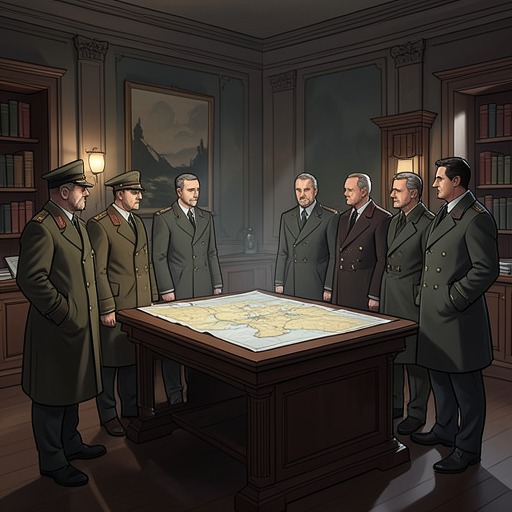
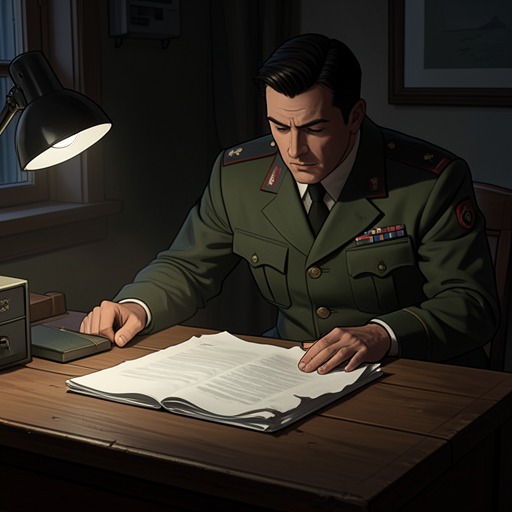
An Officer and a SpyJean Sandherr was a colonel and chief of the Statistical Section from 1887 to 1895, before Georges Picquart succeeded him. His importance in the Dreyfus Affair emerges in two sharply different views: the frail, gravely ill former chief whom Picquart encounters in private, and the powerful official whom Picquart later holds responsible for crucial decisions in the prosecution of Alfred Dreyfus. The contrast makes Sandherr both a figure of personal decline and a consequential part of the institutional history of the case.
Identity and Position
Sandherr led the Statistical Section during the years when the accusation against Alfred Dreyfus took shape. The succession recorded in the account is direct: Sandherr held the chief’s post from 1887 to 1895, Georges Picquart from 1895 to 1897, with Major Henry also identified among the section’s leading personnel. Sandherr was therefore not merely a witness to the early proceedings but the senior intelligence officer under whose leadership key decisions were made.
The narrative provides little biographical background beyond his rank, office, illness, and actions. His character is instead assembled from scenes and later assessments. At the public degradation of Alfred Dreyfus, Georges Picquart recognizes Sandherr by his voice and shaking body. Years later, Picquart describes him to Fernand Labori as one of the officials whose conduct had helped create and sustain the case. These two appearances, separated by the progression of the affair, frame Sandherr through both visible frailty and institutional responsibility.
At the Degradation of Alfred Dreyfus
Sandherr appears beside Georges Picquart as they watch Alfred Dreyfus’s public degradation. His greatcoat, raised collar, muffler, and cap conceal much of him, but his voice identifies him; his body is described as shaking uncontrollably. Picquart salutes him, acknowledging the colonel’s standing even in this moment of public spectacle.
Sandherr’s remark about the scene invokes the Romans and their punishment of Christians, then bitterly recasts the spectacle as the persecution of Jews. Its irony makes the ceremony more than a military punishment in his account: it becomes an instance of anti-Semitic violence carried out under the authority of the state. The remark is pointed, but it does not by itself establish Sandherr’s broader position on the case or on anti-Semitism. The scene leaves that tension unresolved: he can recognize the prejudice embedded in the spectacle, while his later institutional role is bound to the process that condemned Dreyfus.
Leadership and Decisions in the Case
Picquart’s later account to Fernand Labori assigns Sandherr responsibility for three decisions at the case’s beginning. First, Picquart says Sandherr ordered the search for a spy to be confined to the French Army General Staff. That restriction narrowed the inquiry’s field from the outset and, in Picquart’s assessment, constituted its original and fundamental error.
Second, Picquart says Sandherr ordered Dreyfus held in solitary confinement for weeks in an effort to break him. Third, he identifies Sandherr as the official who ordered the secret dossier compiled. These were distinct acts with lasting consequences: one limited where investigators looked, another subjected the accused to severe isolation, and the third introduced secret material into the prosecution. Picquart presents them not as incidental administrative choices but as foundational decisions in how the case was conducted.
Picquart does not claim that Sandherr knew from the beginning that Dreyfus was innocent. In his reconstruction, the crisis deepened when Dreyfus refused to confess and the handwriting of the bordereau remained the prosecution’s only evidence against him. Picquart describes the subsequent fabrication of evidence as a response to that panic. This account places Sandherr within the early structure of the prosecution, while reserving the claim of deliberate fabrication for the later development of the affair rather than attributing that specific act to Sandherr himself.
Illness, Authority, and Picquart’s Visit
When Picquart visits Sandherr at home, the colonel is already gravely ill and confined to bed. Sandherr’s wife initially resists admitting Picquart, but Sandherr recognizes his visitor as a fellow man from Alsace and tells her to let him in. He then calls Picquart into the bedroom and, after Picquart explains that he needs assistance and raises his briefcase, asks to see what it contains. The exchange shows that, despite his condition, Sandherr remains a person Picquart approaches for help and information.
The supplied account does not establish what assistance Sandherr ultimately gives during this visit. Its significance lies in the encounter itself: Picquart brings documents to a former chief whose knowledge belongs to the very institution Picquart is investigating. The urgency of the request is set against Sandherr’s physical incapacity, while Sandherr’s readiness to examine the case materials preserves a measure of professional connection between them.
Later, General Gonse describes Sandherr as a sick man when urging Picquart not to reopen the Dreyfus investigation. Gonse uses the former chief’s illness as part of an explanation for why the original inquiry was not handled professionally, but he also insists that the army cannot go back over the case. The account thus makes illness both a real condition and part of the language through which senior officers discuss responsibility. It explains neither away nor conclusively absolves Sandherr’s decisions.
Aftermath and Narrative Significance
By the time of the later proceedings, Sandherr is dead and absent from the courtroom. Picquart names him among the officials with compromised hands when discussing the secret file with Fernand Labori. Labori, in turn, characterizes the file’s associated figures—including Sandherr, Major Henry, Lemercier-Picard, and Guénée—as bound together by its consequences. The narrative does not specify Sandherr’s role in any particular forgery, so his responsibility is most firmly grounded in Picquart’s account of the original investigation, confinement, and dossier.
Sandherr’s place in the story is therefore built from a consequential gap: the man whose early decisions Picquart identifies cannot answer for them at the later trial. His absence is explicitly counted among the courtroom’s ghostly absences, alongside other dead or missing figures, while those still present circle one another through the continuing proceedings. The former chief’s illness and death give the past a human face, but they also sharpen the unresolved institutional question: how much of the case’s later corruption was already made possible by the choices made under his leadership?